Ani Ma’amin (“I Believe”)


The biggest question about the concept of repentance (teshuvah) is also the simplest: how do you go back at all? The idea of repentance, so deeply embedded in us, rests on an apparent paradox: it asks us to repair what has already happened. Even before the question of whether repair is possible, this raises deeper questions about the meaning of time itself – and about the capacity to return to what has already been done in order to try to change it.
What’s more, repentance demands that we step outside the present in two directions at once: to return to the past and try to repair it, while simultaneously committing to our future actions in order to truly be considered penitent. In other words, teshuvah requires a double movement – toward what has already been and toward what has not yet occurred. But time, as we know, flows only forward. So how is it done?
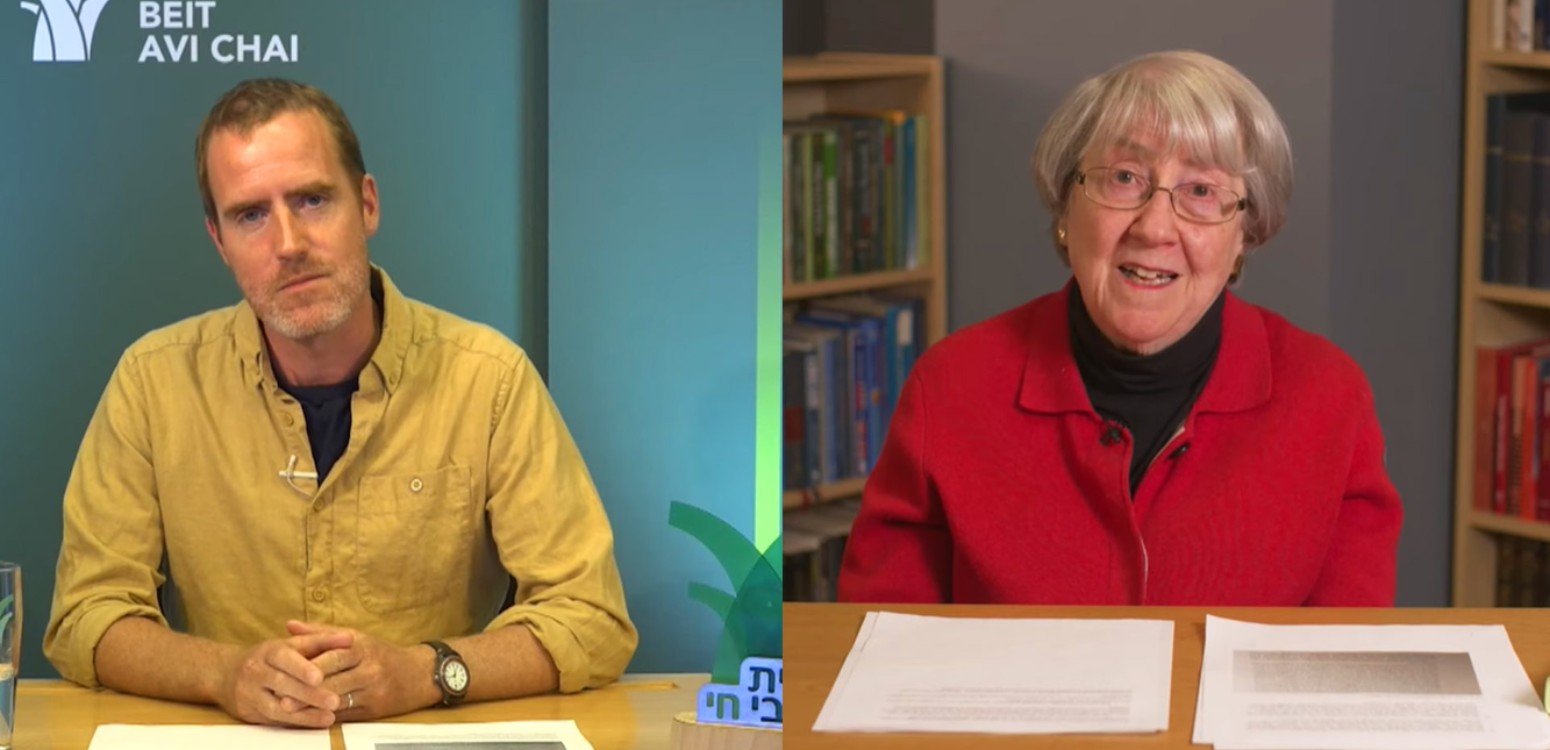
As part of his lecture series “The Philosophy of Repentance,” which Prof. Avi Sagi delivered at Beit Avi Chai, he turned to this question and focused on what he calls “Repentance and the Paradox of Time.”
Maimonides: Repair in a world of linear time
The paradox of repentance appears to arise most sharply in relation to Maimonides, who was an Aristotelian and therefore conceived of time as linear: the past has passed, the future has not yet arrived, and we are in constant motion through time and space toward what lies ahead. In such a framework, return seems impossible.
Maimonides’ solution to this problem resembles, according to Sagi, the psychoanalytic conception: “Maimonides argues that a necessary condition for repentance is the reconstruction of the past and its repair.” This involves a kind of reconstruction similar to what takes place in the therapy room: “The patient returns to the trauma and confronts it,” as Sagi puts it.
According to Maimonides’ famous definition, complete repentance occurs only when a person encounters once again precisely the same situation in which he sinned – the same conditions, the same temptation – and this time chooses not to sin, even though he could. The past is not erased; it is reconstructed within the present, and through that reconstruction, repairing the present in the image of the past becomes possible.
“Maimonides knows full well how problematic this move is,” Sagi explains. “The past, after all, does not truly return. Even when a person reconstructs the situation, he is already a different person, in a different time. And the future is not in his hands either: who can guarantee that he will not sin again?” To the problem of the past, Maimonides responds by turning to God, the Knower of Hidden Things. Only a divine witness – one who sees what is hidden from human sight – can confirm that a person’s repentance is genuine and that he will never return to his sin. Maimonides’ repentance is so paradoxical an event that it depends on the transcendent in order to exist at all.
Only God, who knows the future, can attest that the repentance is sincere. From the perspective of the person himself, repentance always remains on the threshold of uncertainty. Linear time – moving from past to future – does not permit genuine return, only a partial reconstruction dependent on grace.
Repentance as existence: The sages and Heidegger
But the Jewish tradition also offers an entirely different understanding of repentance. In Tractate Avot, Rabbi Eliezer says: “Repent one day before your death.” Maimonides expands on this, arguing that since a person does not know when he will die, he must repent every day, lest he die the next. According to Rabbi Eliezer, then, repentance is not a singular event in which one repairs something that happened, but a way of life. A person is called upon to be always alert, always ready. Repentance is an ongoing existential state.
To clarify the difference between this continuous existential understanding of repentance and the reconstructive linear one, Sagi turns to the German philosopher Martin Heidegger (1889–1976), who distinguishes between ordinary, measurable time and temporality (Zeitlichkeit) – time as it is lived and experienced in human existence. He explains: “The clock measures linear time, but linear time is not the only time within which we live.” Our lived experience is not synchronized with the minutes ticking on a clock; certain minutes can feel like an eternity, while entire days can fly past. The past and the future, too, are not experienced by us in a linear way – we experience the past in real time when we remember it, and we imagine the future in the present tense, though in doing so we distort, reshape, and experience them as present events. A person gathers into the existential moment in which he lives both his past and his future. He moves out toward the future through his decisions, and from the future he gives meaning to his past.
As Sagi emphasizes: “The past we engage with is not the past that was in the past. It is the past as it receives its sense and meaning within our lives.” In this sense, the process of repentance is not a return backward but a continuous shaping of existence in the present.
The significance of this approach takes on a fascinating dimension in the extreme example Sagi draws from another German philosopher, Karl Jaspers (1883–1969). Jaspers asks: what does repentance mean for the children of Nazi war criminals? They did not commit the crimes, yet they cannot disown them either. “This is not criminal guilt,” Sagi explains. “It is not exactly moral guilt either. It is existential guilt that arises from being the child of a Nazi war criminal. And you must translate the meaning of that guilt and its repentance into your own life.” The past here is not something that can be repaired or erased. But it is possible – and perhaps even obligatory – to carry its meaning within one’s present life, and to shape one’s identity and choices in its light.
Here the depth of the difference between the two conceptions of repentance becomes clear. For Maimonides, repentance is an attempt to return to the past and repair it through reconstruction. In a more existentialist mode of thinking, repentance is a continuous movement of shaping the present in light of both the past and the future together. Within this framework, Sagi does not see repentance as a ritual of erasure – and therefore it need not grapple with the paradox of time. This is repentance as alert and responsible existence: the way a person holds what was, and what he wishes to become, within the moment in which he is now living.
This article was originally published in Hebrew.
Main Photo: AI