OldContentID: 0
OldRefID: 0
About This Program
This year, as we come together to mark October 7, we are still learning how to do so. After three long and difficult years, this is the first time we mark this day with all the hostages home. For two years, we held our breath, achingly waiting for the day of their return. This year, amidst so much pain and sorrow, perhaps we can take this moment and allow space for memory, for grief.
Through Beit Avi Chai’s series Adam / Adama – Man / Land – we begin with a journey together back to one of the places most scarred by that day. In the fields of Kibbutz Be’eri we will meet the people who are growing their crops and rebuilding their homes, hear their stories, the questions and the choices their community has faced since. As the title implies, this journey takes us to the heart of where meaning and memory reside – to the land that is both home to a community and a living memorial; to the fields that speak of life and resilience; to the food that grows from the earth and sustains both body and spirit. Finally, like the episode, we end by sharing a meal or a song, and most importantly – sharing memories.
Content warning: Though largely hopeful and resilient, this episode touches on trauma and loss, and includes a difficult personal account of the day. Please familiarize yourself fully with the episode before the session, and adapt the program to your group.
Program Overview
1. Opening Circle & Reflection | 10 min
2. Before We Watch | 10 min
3. Viewing | 30 min
4. Post-Viewing Discussion | 20–30 min
5. Hands-On Activity – cooking or sing-along | 20–30 min
6. Closing Reflection | 5–10 min
1. Opening Circle & Reflection
> Sitting in a circle, begin with a brief welcome, before asking the following questions. Allow a minute of quiet reflection before going around the circle, inviting each person to share a few words.
- Think back to the day of October 7. What is one specific detail you remember most vividly a sound, an image, or a feeling?
> Follow-up with these open questions to the group, inviting a few voluntary responses.
- Three years on – how do you think about that day now?
- Has it changed, the way you carry it, how you remember it?
- Does it feel different this year, now that all the hostages are home?
2. Before We Watch
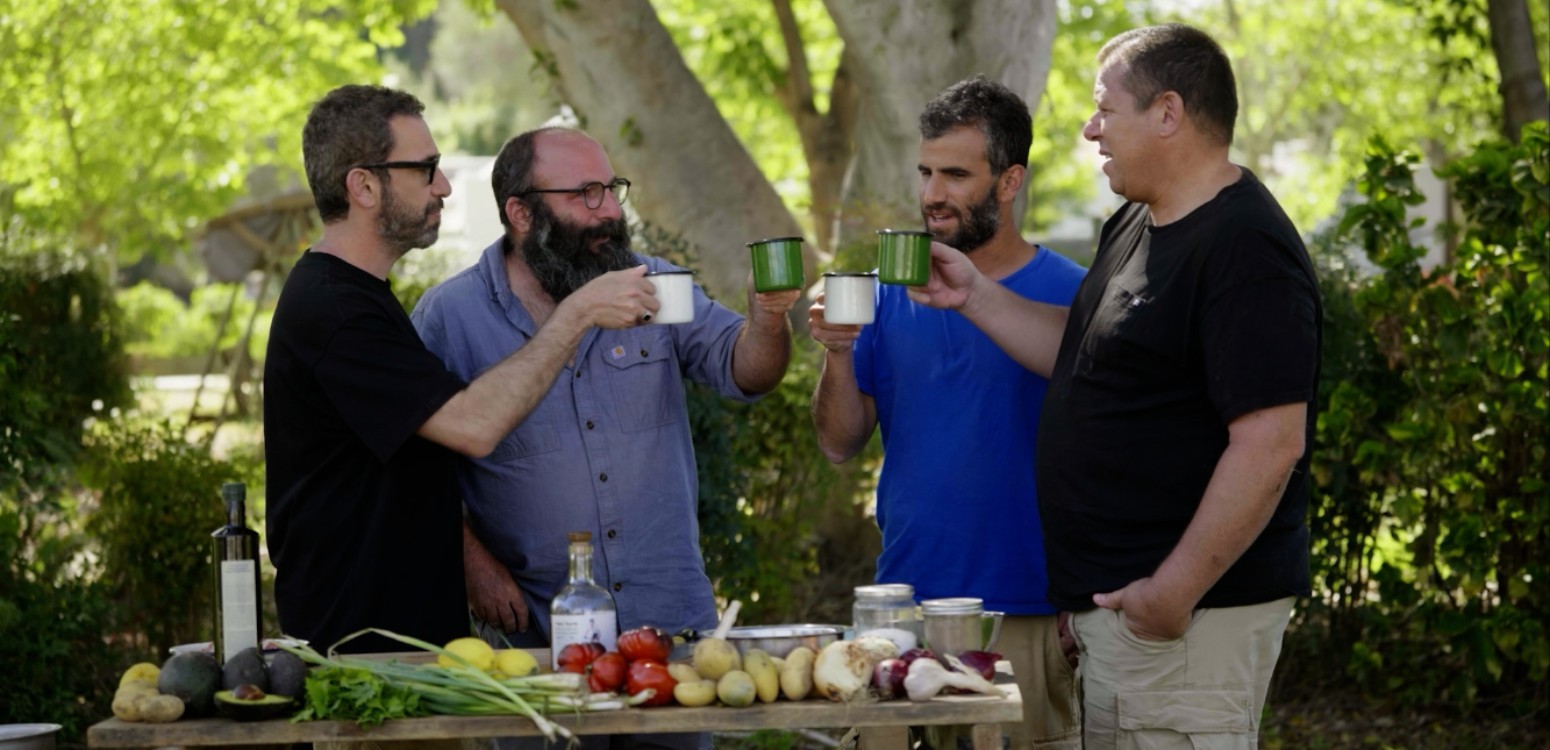
> Introduction: We're about to watch an episode of Adam/Adama – "Man/Land" – a series by Beit Avi Chai following musician Shlomi Shaban and farmer-chef Hedai Offaim as they travel the country meeting farmers in their fields. Tonight's episode takes us to Kibbutz Be'eri – one of the hardest-hit communities on October 7 (30 hostages taken, 102 killed), and since then, a symbol of that day.
- Before we "get in the car" with Shlomi and Hedai - take a moment to check in- with yourself How do you feel about "visiting" Kibbutz Be'eri?
> The Wheat Grows Once More: Throughout the episode, many references are made to “The Wheat Grows Once More”. A beloved and widely quoted song written in the wake of the Yom Kippur war, it touches on the painful dissonance of life continuing in the wake of great loss.
[For a full unpacking of the poem and deeper exploration of these themes, see our full educational guide here.]
3. Viewing
4. Post-Viewing Reflection & Discussion
> Initial reflection:
- What emotions came up for you while watching?
- Was there a moment that stood out to you – a visual image or a quote? Why?
- Where did you feel the ideas or themes of The Wheat Grows Once More come through in the film?
> Unpacking what we’ve seen:
Throughout the episode, we don't just hear what the farmers remember – we see how they remember it: what they choose to share, how they describe it, what they hold onto.
- What choices have the farmers made in how they carry the memories of that day?
- The series is titled Adam/Adama – Man/Land. What role do you think the relationship between people and the land plays in Be'eri's journey of memory and rebuilding?
- What role does community play in how Be'eri is moving forward?
- Have you experienced that kind of collective strength in your own community these past three years?
> Closing the discussion:
- There are many stories from that day, and many ways to tell them.
What choices do you think the filmmakers made in how they told this story? (the backdrop, the music, the timeline)
- There are many ways to mark this day, many places we could have "gone," so many testimonies we could have heard. What do you take with you from these specific testimonies, from this specific place?
5. Hands-On Activity – Kneading Memory
Option A: Cook or Bake Together
> Introduction: Avida mentioned the chadar ochel (dining hall) being as important as the synagogue – the heart of any kibbutz, the center of community life. Food carries a similar
weight in Jewish life: it is at the heart of our gatherings, of traditions and stories passed down through generations, tying us to the people and places we call home. It is how we hold onto memory and celebrate life, all at once. In that spirit – just as they gathered around the table to make and eat Hedai's grandmother's knishes – we will now do the same.
> Cook or bake together – making Hedai's knishes [Appendix B], or a recipe with meaning to your own community.
> While the group works, ask the following questions. Let the conversation flow or write the questions down on cards, inviting participants to pick one and respond throughout the activity.
- What food reminds you of home or brings you comfort?
- Is there a food that brings back a person, a place, or a meaningful moment?
- What are your favorite gathering-round-the-table memories?
- Is there a recipe that's been passed down to you – from a parent, a grandparent, a community?
Kibbutz Canteen Knishes
Ingredients:
For the filling:
1 onion
¼ cup extra virgin olive oil
½ kg ground beef
3 garlic cloves
1 bunch parsley
6 scallions
2 tablespoons flour
Salt and coarsely ground black pepper
For the dough:
6 potatoes
6 tablespoons flour
4 eggs
Salt and ground pepper
¾ cup extra virgin olive oil for frying
Instructions:
Boil the potatoes in their skins in salted water over high heat until tender. Remove from the water and let cool.
Meanwhile, prepare the filling: finely chop the onion and add it to a wide pot over high heat. Stir with a wooden spoon until it turns golden, then add the olive oil. Stir a bit more, then add the ground beef and garlic. Fry, stirring, until the meat turns grayish-brown and slightly dry. Finely chop the parsley and scallions and add them to the pot. Stir well, then season with salt and black pepper. Add one or two tablespoons of flour and mix thoroughly, until the flour is absorbed and the mixture becomes slightly smoother. Remove from the heat and let cool slightly.
Peel the potatoes and mash them. Add flour until the mixture holds together well. Form into golf ball-sized balls and flatten each in the palm of your hand. Fill with the meat mixture and seal into a thick patty.
Beat the eggs. Dip each patty in the beaten egg, then transfer to a pan of hot oil over medium heat. Fry on both sides until golden brown.
Remove to a strainer to drain, and serve with chopped avocado salad and a cold glass of soda water.
Option B: Sing-Along to a Shared Playlist
> Introduction: The episode closes with Shlomi bringing his grand piano out into the fields, performing Chava Alberstein's "Lefetach Har Ga'ash" (“At the opening of a volcano”) – a song that asks, again and again, why anyone would stay and rebuild their home at the foot of a volcano. The song doesn’t offer an answer. But played there, in the fields of Be’eri, among people who have chosen to stay “at the foot of the volcano”, it takes on a new resonance, an expression of what it means to remain, to rebuild, to carry on.
There's a power in coming together in song – in finding comfort in someone else’s words when our own are difficult to find, and allowing many voices to carry something that might be too heavy for one person alone. In song we can hold pain, sorrow and hope together. Tonight, we invite you to do just that.
> Invite the group, individually or in pairs to choose a song that resonates with them, perhaps ones that have been meaningful to them since October 7th. . Each pair can add their chosen song to the prepared source sheet in Appendix C. Gather the group in a circle and sing selected songs together. Before each song, invite the pair who chose it to briefly share what the song means to them or why they chose it.
>For a suggested spotify playlist click here
>Beit Avi Chai's 'Song of Hope' Project
6. Closing Reflection
Tonight, we went back to Be'eri – to its fields and its people, heard their testimonies and saw the life they are rebuilding. We sat with memory and how we choose to remember, and met the strength of community to hold memory together.
- Before we go: what's one word, one thought, or one question you're taking home with you tonight?
Model.Data.ShopItem : 0
12